Published work
Book chapters
AI-Enhanced Bariatric and Endobariatric Surgery: Predictive Analytics, Complication Surveillance and Intelligent Patient Care
DOI 10.5772/intechopen.1014639 · Open access · 24 pages
A review of artificial intelligence and machine learning across bariatric and endoscopic weight-loss interventions, synthesising roughly 300 studies published between 2018 and 2025.
What the chapter found
Preoperative AI models for predicting complications gave only modest gains over traditional methods — improvements in AUROC of about 0.02 to 0.12. Predictive models for endoscopic sleeve gastroplasty performed well at forecasting twelve-month weight loss from early postoperative data, and deep learning outperformed conventional clinical scores at predicting diabetes remission.
The review is equally clear about what is not yet working. Class imbalance and the difficulty of detecting rare adverse events remain unsolved. External validation is scarce, calibration is often poor, and the evidence base for several endobariatric procedures is thin. Intraoperative computer vision is still underdeveloped. The conclusion is that useful deployment will require multicentre validation, explainable models, adherence to reporting standards, and strategies that adapt to very different healthcare settings — a point that matters for surgery in Palestine as much as anywhere.
Subject areas
Artificial intelligence · machine learning · deep learning · bariatric surgery · metabolic surgery · endobariatric surgery · endoscopic sleeve gastroplasty · predictive modelling · computer vision · risk stratification
Books
Visual Guides for Medical Students — an open series of illustrated guides, each deposited with a DOI and licensed for teaching.
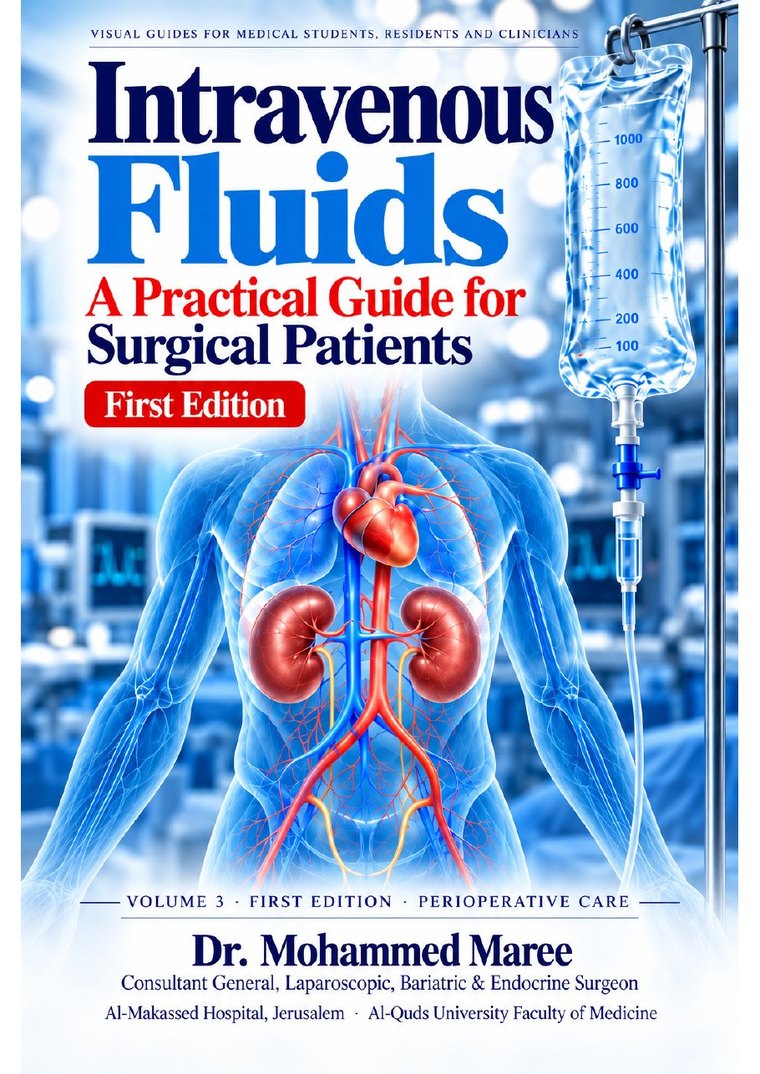
Intravenous Fluids: A Practical Guide for Surgical Patients
DOI 10.5281/zenodo.23496713 · CC BY-NC-ND 4.0 · Free to download
Resuscitation, maintenance and replacement for the surgical patient: choosing the fluid, the volume and the rate, reading the fluid balance chart, and the falling urine output on the first night after an operation.
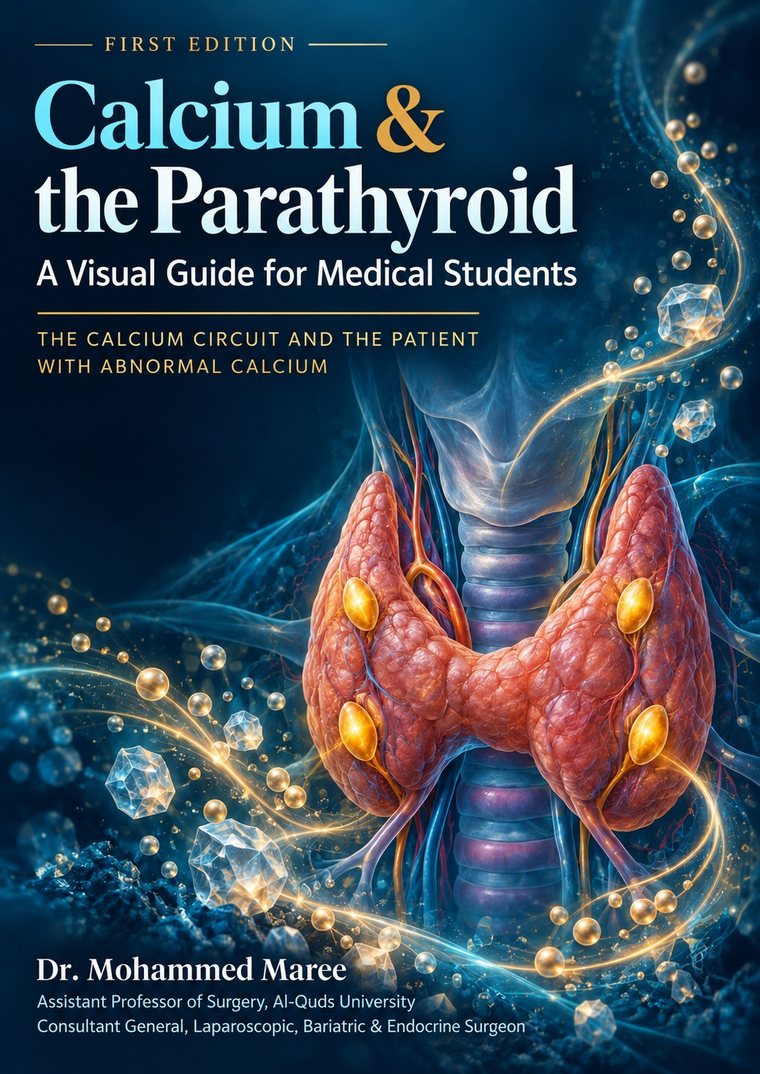
Calcium & the Parathyroid: A Visual Guide for Medical Students
DOI 10.5281/zenodo.23158993 · CC BY-NC 4.0 · Free to download
The calcium circuit in ten illustrated steps, then the patient: reading a calcium result, the three numbers that give the diagnosis, primary hyperparathyroidism and its operation, the hypercalcaemic crisis, and hypocalcaemia after neck surgery. Five worked cases close the book.
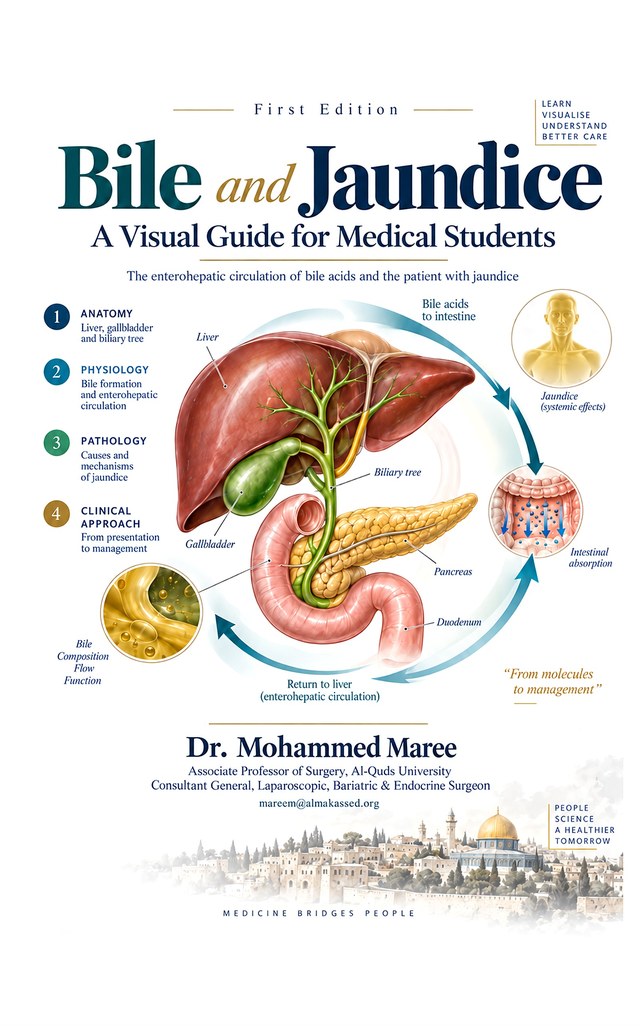
Bile and Jaundice: A Visual Guide for Medical Students
DOI 10.5281/zenodo.23006422 · CC BY-NC 4.0 · Free to download
An illustrated guide to the enterohepatic circulation of bile acids and the clinical approach to the patient with jaundice, written for fourth-year medical students on a surgical rotation. Deposited in Zenodo and indexed by OpenAIRE.
In preparation
- Acid–Base Balance From first principles to the arterial blood gas of a surgical patient
Research interests
Metabolic and bariatric surgery outcomes, surgical education, and the surgical workforce, with an emphasis on multicentre and population-level data from the Palestinian healthcare context.
ORCID: 0000-0002-7005-4528